Processor Basics (2) - Types and Usage -
2026-10-28
In the previous article, we introduced what processors are like,the factors that enhance performance, and the applications for processors, covering the essential information needed to understand processors. In this article, especially in the field of high-performance computing, we will explain the characteristics of different types of processors (CPU, GPU, FPGA, ASIC, etc.) that are used according to different applications, as well as how they are used.
1. Types of processors
A processor is a general term for semiconductor devices that perform computational processing, but depending on the application and design requirements, several types are used properly. Broadly speaking, CPUs, GPUs, FPGAs, and ASICs are representative.
Let's compare each and look at its features and usage.
1-1. CPU
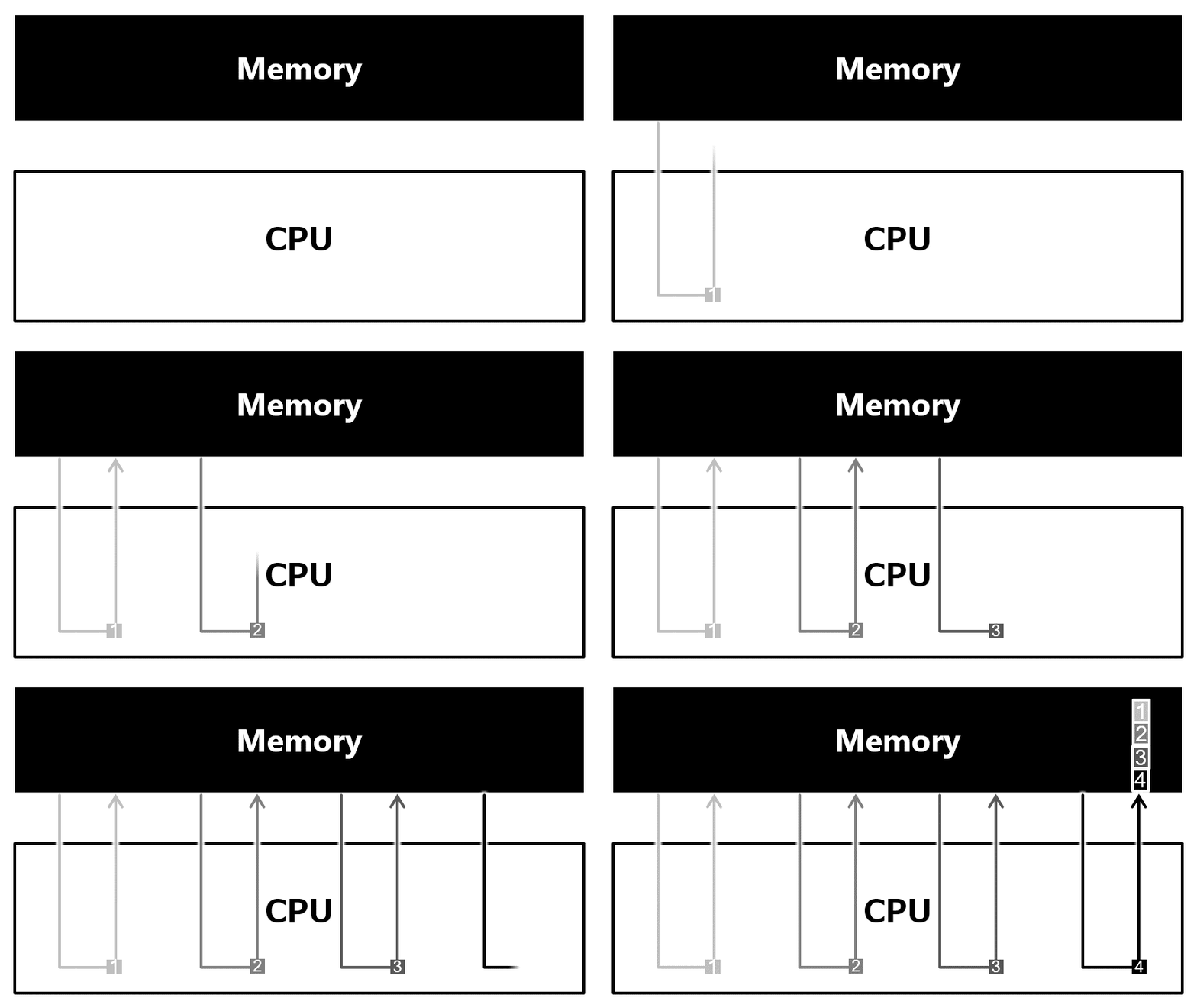
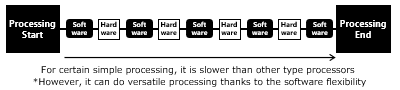
CPUs (Central Processing Units) began to be commercially used in the 1970s, starting from simple uses like calculators, and by the 1980s they had evolved into computers doing various jobs with more advanced in performance as circuit miniaturization progressed. Among processors, the CPU is considered the most common type. The reason lies in flexibility and versatility, and by making extensive use of software dependent processing during the process, it is designed to run any application. This is something that cannot be achieved with the co-processors (like GPUs, FPGAs, ASICs) described later. Applications (computer programs) that run on smartphones, PCs, cloud services, and various other devices are mainly processed by CPUs, and because there are many software developers involved in their development, a vast number of applications are deployed. There is no doubt that CPUs are the link between us and information, and have played a central role in the evolution of information society. In recent years, CPUs are recognized as key components more than before, and more smartphone and PC manufacturers, as well as cloud service providers, are developing their own CPU products to differentiate their performance from competitors.
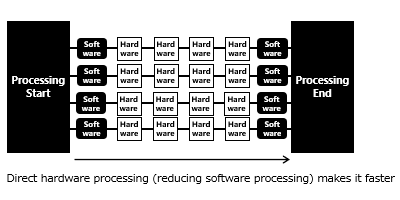
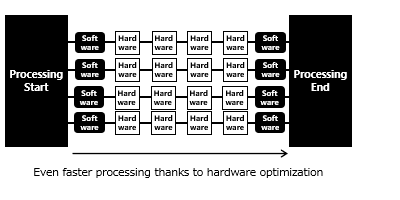
However, there are also shortcomings for CPUs. On the flip side of high versatility, when performing specific processes repeatedly, software processing becomes redundant, resulting in slower processing speeds compared to GPUs, FPGAs, and ASICs described later. As a result, the combination of CPUs + these processors are used increasingly for optimized performance (as explained later).
Suitable use of CPUs … A general-purpose computing applications that allows very flexible use of software programs
Representative CPU Manufacturers … Intel, AMD, Qualcomm, MediaTek, NXP, and others
1-2. GPU
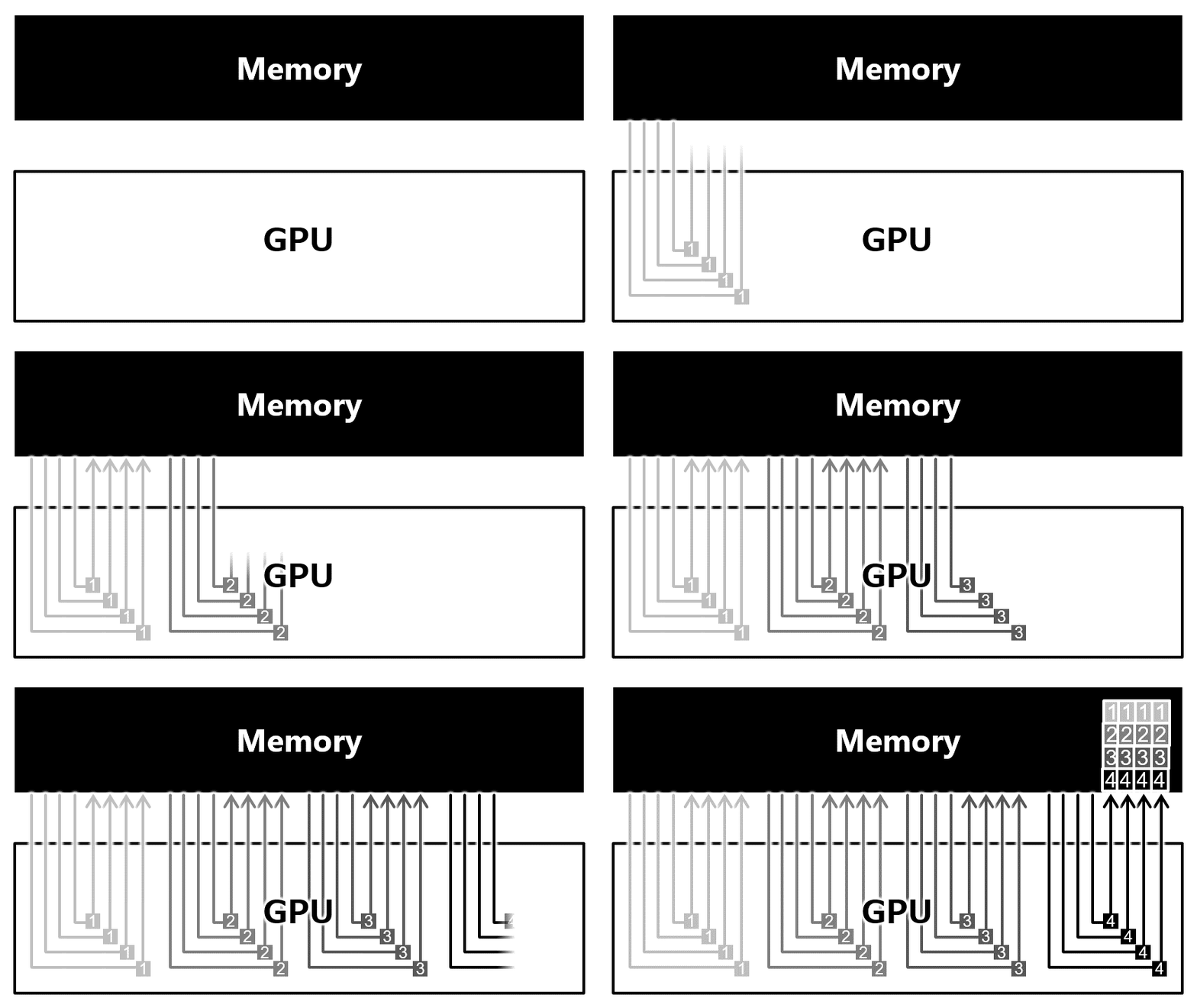
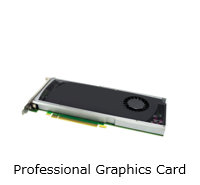
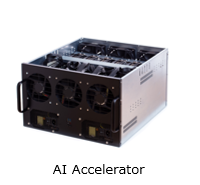
A GPU (Graphic Processing Unit), as the name suggests, refers to a processor that processes graphics. Its origins began in the 1970s, and from the 1990s it became widespread for image processing on Windows PCs and video game consoles. Compared to CPUs, it is built with circuits superior in parallel processing with more cores, enabling faster image processing. GPU performance & demand have been driven by the needs of advanced graphics technologies mainly in 3D games and 3D CAD. However, from the mid-2000s, GPUs started to be used as GPGPU (General Purpose GPU) for more general data processing applications. At the time when data processing using only CPUs was a bottleneck, GPUs' high parallel processing capability attracted the interest of many researchers and service providers, and their applications expanded to various applications such as scientific computing, big data analysis, image recognition, and AI development, which require handling large amounts of data. In recent years, GPUs have become indispensable processors in generative AI, which has attracted significant attention, and are widely used as AI accelerators in data centers. The reason GPUs are preferred in AI development is not only due to their excellent parallel processing performance. AI development need to flexibly adapt to the ever-evolving advanced AI processing algorithms. In this regard, GPUs have accumulated software resources during the evolution of GPGPU, resulting in making them the standard for AI development. This is why GPUs are utilized by AI developers more often than competing FPGAs and ASICs (described later).
However, one drawback of GPUs is higher power consumption than FPGAs and ASICs. Because GPUs rely more on software processing. In spite of the drawback, GPUs are preferred by AI developers and, and higher-performance GPU products are actively being launched frequently in response to market demand.
Suitable use of GPUs … Applications that require fast and flexible processing of large volumes of images and data
Representative GPU Manufacturers … Nvidia, AMD, Intel, and others
1-3. FPGA
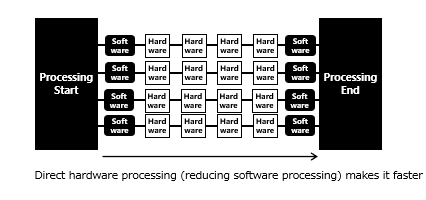
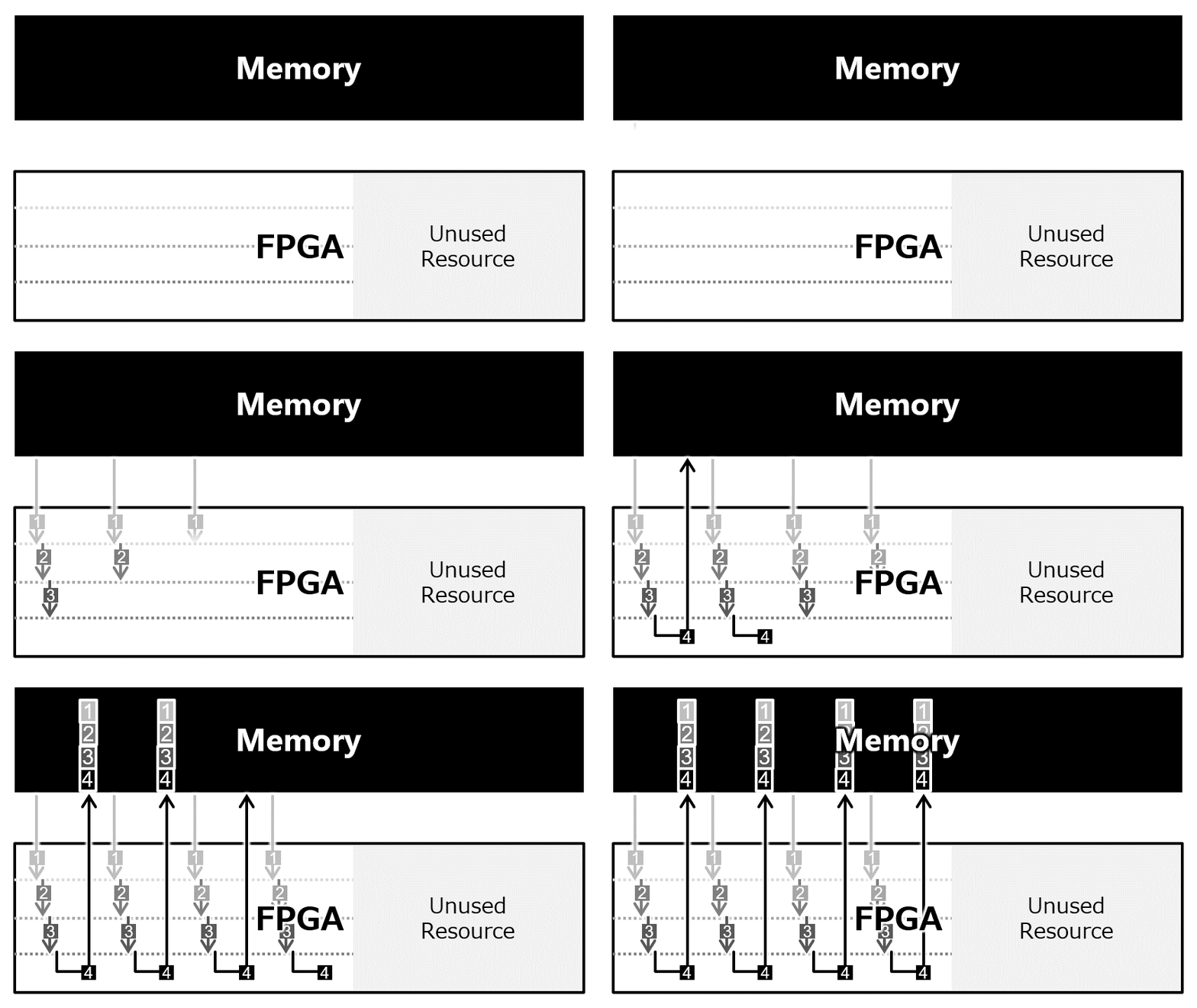
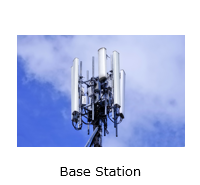
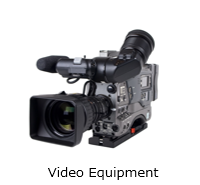
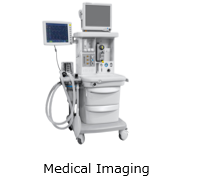
FPGA (Field Programable Grid Array) began commercial use in the 1980s as an alternative solution to ASICs. Because it focuses on direct processing through circuits, it is more power-efficient compared to CPUs and GPUs. As the name suggests, a biggest feature is that circuits can be freely programable in field (anytime during operation). ASICs (described later) are the optimal solution when they are confirmed to be used in large quantities without specification changes for specific fixed applications, but in some actual applications, specifications and demands may be unclear during the development stage. In such cases, the flexibility of FPGAs is leveraged to accelerate device design and mass production time. For example, industrial equipment that requires flexible support for codecs and interfaces depending on the usage environment, and base stations that need to adapt to changes in communication standards (protocols) are the cases. The value lies in the fact that circuit programing is possible not only in development stage but also after mass production, which is not possible with ASICs. Another advantage of FPGAs is that they are supplied for a long period. There is also a useful solution where the FPGA substitutes the functionality and continues supply instead of an unavailable ASIC due to the end of production.
While FPGAs replacing ASICs is highly convenient, replacing CPUs and GPUs is not practical. The value of general-purpose computing with CPUs and GPUs handles vast numbers of computer programs on demand, and implementing all of them as circuits on an FPGA is not realistic. From this perspective, it can be effective for replacing CPUs and GPUs in devices that do not require high degrees of flexibility.
Suitable use of FPGAs … Various applications that require a balance between flexibility and power efficiency, shorter time-to-market, long product service life
Representative FPGA Manufacturers … AMD, Altera, Lattice, Microchip, and others
1-4. ASIC
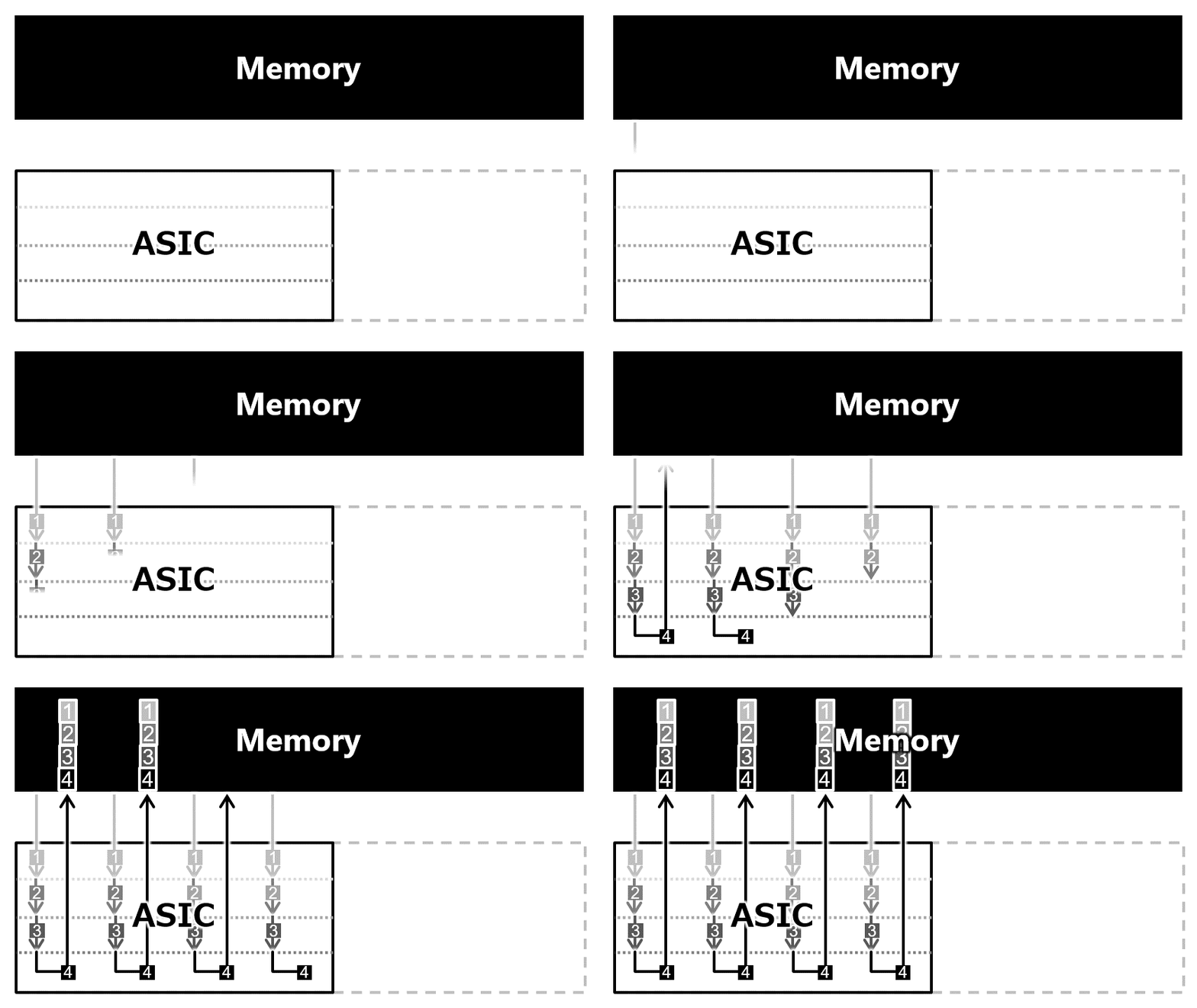
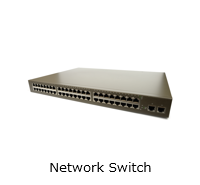
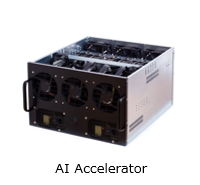
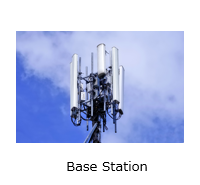
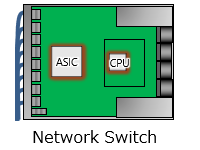
An ASIC (Application Specific Integrated Circuit) is, as the name suggests, a processor designed specifically for specific applications. Looking back the origins of processors, computational processing was achieved solely by hardware combining individual logic ICs for specific applications. ASICs are also designed to handle most processing in hardware (circuits) for specific applications, so they can be considered processors with the most primitive concept. ASICs are even better than FPGAs in terms of power efficiency. Because unlike FPGAs, ASICs don’t have extra circuit elements to allow flexible circuit changes. Thanks to this, ASICs have the highest performance per power among all processor types. When a large volume of processing demand arose, and processing its method is routinized (or does not require flexibility), making the optimized ASIC is the most cost-effective and power-efficient solution. Some examples of use cases include network switches, base stations, AI and communication accelerators, video transcoders, and cryptocurrency miners. Looking at market, ASICs can be called differently depending on their specific use purpose or manufacturer-specific names (ex. TPU, IPU, DPU, NPU, VPU, etc.).
Compared to other processors, ASICs are designed more carefully and require more time and effort. Even if tiny bugs found after mass production, the circuit or software defects cannot be addressed. There are some ASICs allowing software programing adjustment, but the adjustment range is very limited. Therefore, when new workload types arise, it is common to initially use more flexible GPUs or FPGAs to handle them. And after its processing method becomes routinized and mass volume use is promising, the use of ASICs gets more reasonable. Actually, there have been increasing cases where growing cloud service providers develop their own ASICs. By converting widely used GPUs and FPGAs into their own ASICs, significant cost reductions in processor prices and power consumption can be expected.
Suitable use of ASICs … Various applications with high demand for routinized processing
Representative ASIC Manufacturers … Broadcom, Marvell, Intel, AMD, switch and base station manufacturers, major cloud service providers, and others
| Processor Type |
Hardware (Performance)* |
Software (Versatility)* |
Features |
|---|---|---|---|
| CPU |  |
Pros High flexibility and versatility by software is suitable for complex processing tasks.
ConsApplications are developable using only software resulting in many and various applications. To adapt user applications, GPU, FPGA, ASIC often accompanies CPU as the system host. In certain processing, it performs lower than co-processors. This is because many processing
involve software and are not optimized for specific processing. |
|
| GPU |  |
Pros In simple processing, it performs higher than CPU, accelerated by parallel circuits.
ConsIt delivers performance higher than CPUs for processing large amounts of data in images and AI. Compared to FPGAs and ASICs, software offers greater convenience and a large developer population for image and AI processing. With more software processing, its performance efficiency is inferior to that of FPGAs and ASICs. |
|
| FPGA | Pros Unlike other processors, the circuits can be rewritable after manufacturing.
Such feature is suitable to meet applications that require frequent specification changes and efficiency.
ConsMore hardware processing enables power efficiency compared to CPUs and GPUs. Compared to ASICs, development time can be shortened. Because it requires circuit knowledge, the application development is harder than CPUs and GPUs. As a trade-off of circuit flexibility, FPGAs’ power efficiency is inferior to that of ASICs. If used in large quantities, the cost is also inferior. |
||
| ASIC | Pros Circuit optimization for specific processing enables highest power efficiency.
ConsFor applications where the processing flow is standardized and large quantity usage is required, it is the most power-efficient and lowest-cost option. The application is limited, and much developing effort is required for the optimal specifications. As a trade-off of optimization for specific processing, processing it is lacking in flexibility unlike FPGAs. |
2. How processors are used ~CPU + Co-processors~
As described above, each processor has its pros and cons, and is used in the right place for the right purpose. It is important to note again that there are frequent cases that CPU and co-processors (GPU/FPGA/ASIC) are used in combination.
(1) CPU handles general applications flexibly for users
(2) GPU/FPGA/ASIC help more efficient processing in certain area
In such cases, the CPU is called the main processor (host), and the co-processor is called the co-processor (accelerator). This combination has been widely used to compensate for the lack of CPU performance. The co-processor implementation can be either externally installed as a separate processor or integrated into a single processor package, depending on requirement differences in each application. In short, it is separated for more performance, while integrated for more efficiency.
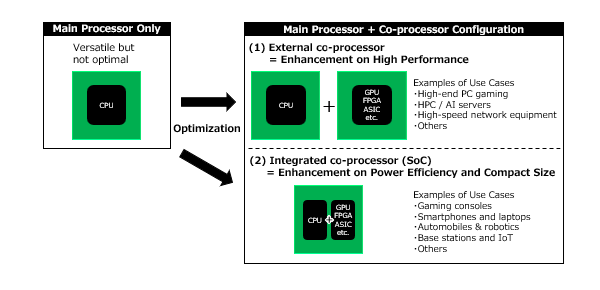
<External Type>
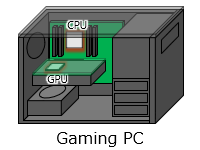
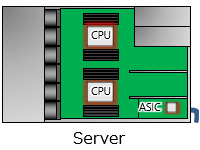
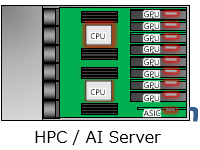
This is a method that allows combining individual processors more easily or flexibly and achieve high performance. Common uses include CPU+GPU for gaming (Gaming PC), CPU+ASIC or FPGA for high-speed server networking (SmartNIC), and CPU+ASIC for high-speed switch networking. In areas of servers and switches where higher processing performance is required, an increasing number of processors are used per rack. For even larger-scale computational processing, hundreds or thousands of processors across multiple racks can work together. Such large-scale processing configuration was previously limited mainly to scientific applications, but recently it has expanded to more commercial applications using big data and AI.

引用元:Source: NVIDIA Grace Hopper Superchip | NVIDIA
<Integrated Type (SoC)>
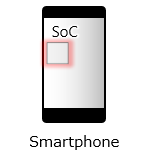
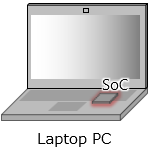
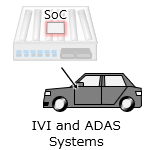
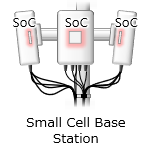
This method is ideal for applications requiring space savings and high efficiency. Such integrated packages are often called SoCs (System On Chip), and as the name suggests, they are processors developed to handle the necessary processing just with a single chip. In many cases, they are optimized for specific electronic products. But unlike ASICs, SoCs include CPUs offering more software & application flexibility for users. The terms SoC and CPU are often used to refer to the same processor product in commercial context. But in technical context, SoC and CPU are not the same. For example, the processor in a notebook PC is often called a CPU, but it also contains a GPU, and recently an ASIC (NPU) for AI processing. So technically, it is a SoC. Other SoC examples are CPU+GPU or FPGA or ASIC in automotive IVI / ADAS and autonomous robots, and CPU+ASIC or FPGA in small cell base stations. The co-processor type selection often varies by manufacturer. Because SoCs combine flexibility and power efficiency, they are expected to be continuously utilized in various applications like edge computing, where general-purpose computer programs are required as well as limitations in power and size.
*MCUs (microcontrollers) also incorporate the necessary functions on a single chip and are considered a type of SoC. Generally, MCUs have lower processing performance compared to products refered as SoCs, and are used in consumer, industrial, and automotive devices for simple image processing, motor control, and monitoring of various systems.

Source:AMD at Computex 2024: AMD AI and High-Performance Computing with Dr. Lisa Su - YouTube
In this article, we introduced the characteristics of each type of processor that can be used according to its intended use, as well as how it is combined with different processors. In the next article, we will explain the power requirements and configurations, which are essential for processor operation.
3. Related Articles
- Processor Basics (1) - Overview and Trends -
- Processor Basics (3) - Overview and Design of Power Supplies -
- Processor Basics (4) - Key Characteristics Required for Inductors and Capacitors -
- Will Generative AI Drastically Change the World? - the Evolution required for AI Services and the capacitors Supporting Them - (First Part)
- Will Generative AI Drastically Change the World? -The Evolution Required for AI Services and the Capacitors Supporting Them - (Second Part)
4. Tags Related to This Article
 Search by Category
 Search by Keyword
 Search by Product